
What Airsheds Do and How Air Quality Monitoring Works in Alberta

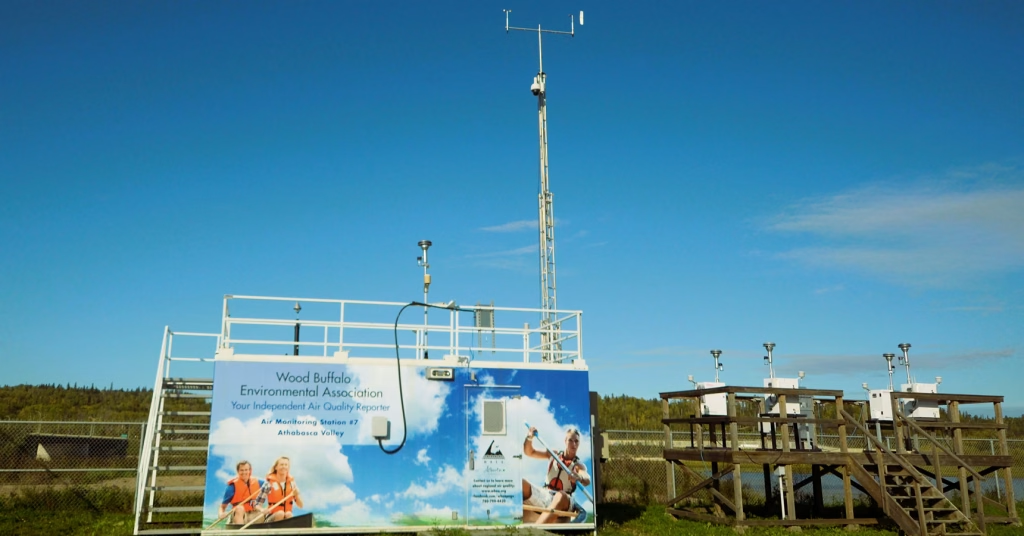
Air quality affects every Albertan, from the air we breathe outdoors to the air we breathe in our homes, workplaces, and schools. Alberta’s Airsheds play a central role in understanding and communicating local air quality by monitoring pollutants, analyzing data, and sharing trusted information with communities, regulators, and health professionals. Here’s how Airsheds do this work and what they monitor across the province.
What Air Quality Means
Air quality is a measure of how clean the air is around us. It depends on how many pollutants are released into the atmosphere and how well those pollutants disperse. Weather and geography play a major role. Wind speed and direction, temperature, precipitation, humidity, and land features such as valleys and hills all influence how pollutants are dispersed.
Airsheds monitor a wide range of pollutants to understand these conditions, including:
- Carbon monoxide (CO)
- Hydrogen sulphide (H2S)
- Methane (CH4)
- Nitrogen oxides (NOx)
- Non‑methane hydrocarbons (NMHC)
- Ozone (O3)
- Particulate matter (PM10 and PM2.5)
- Sulphur dioxide (SO2)
- Total hydrocarbons (THC)
- Total reduced sulphur (TRS)
Meteorological data is also collected to understand how weather affects pollutant levels. This includes wind speed and direction, temperature, precipitation, and relative humidity.
How Airsheds Monitor Air Quality
Airsheds use several complementary monitoring methods to capture a complete picture of air quality across Alberta. Each method provides different types of information that support public reporting, regulatory requirements, and long‑term environmental and health research.
Continuous Monitoring Stations
Continuous ambient air quality monitoring stations provide near‑instantaneous measurements of pollutants such as sulphur dioxide, nitrogen oxides, ozone, fine particulate matter, carbon monoxide, and total reduced sulphur. These stations also collect meteorological data to help interpret how local conditions influence pollutant levels.
Averages are calculated over 1-minute and 1-hour intervals to determine the maximum and minimum concentrations. This real‑time data is used to calculate the Air Quality Health Index (AQHI), a tool that helps Albertans understand daily health risks from air pollution.
Airsheds place strong emphasis on credible, scientifically defensible data. Quality assurance includes daily calibration checks, primary and final validation, independent assessment, monthly multi‑point calibrations, internal audits, and external audits conducted by the Government of Alberta. All raw and quality control data is archived and examined for long‑term trends. Monitoring methods meet or exceed provincial and federal requirements.
Integrated Sampling
Integrated sampling provides time‑weighted average measurements of gases, vapours, or particulate matter over a set period. Samples are analyzed in a laboratory to determine pollutant concentrations.
Airsheds use two main types of integrated samplers:
- Intermittent samplers collect 24‑hour samples every six days, following the National Air Pollution Surveillance schedule. These samples often measure particulate matter, heavy metals, and volatile organic compounds.
- Passive samplers collect monthly averages and are used to monitor pollutants such as sulphur dioxide, hydrogen sulphide, nitrogen dioxide, or ozone.
Integrated sampling is especially valuable for long‑term trend analysis and comparing pollutant levels across regional networks.
Sensor and Microsensor Technology
Community‑based sensors and microsensors supplement real‑time air quality information at the neighbourhood level. These smaller devices help fill monitoring gaps in rural communities or dense urban areas. Airsheds currently use microsensors to measure fine particulate matter, providing additional insight into local air quality conditions.
From Data to Public Information
Once collected, air quality data is analyzed for insights and trends, and all data and reports undergo validation to ensure accuracy. Public reporting makes data available to communities and supports tools like the AQHI. This information is shared through Airshed websites, where Albertans can access real‑time data, reports, and resources.
Why This Work Matters
Air quality monitoring helps communities understand local conditions, respond to pollution events, and make informed decisions about health and outdoor activities. It supports environmental protection, regulatory compliance, emergency response, and long‑term planning.
Airsheds provide the trusted, science‑based data that Alberta relies on to protect the air we all share. If you want to explore more about how monitoring works in your community or learn about specific parameters, contact your local Airshed.



Leave a comment