
Idling and Air Quality: Why Small Choices Make a Big Difference

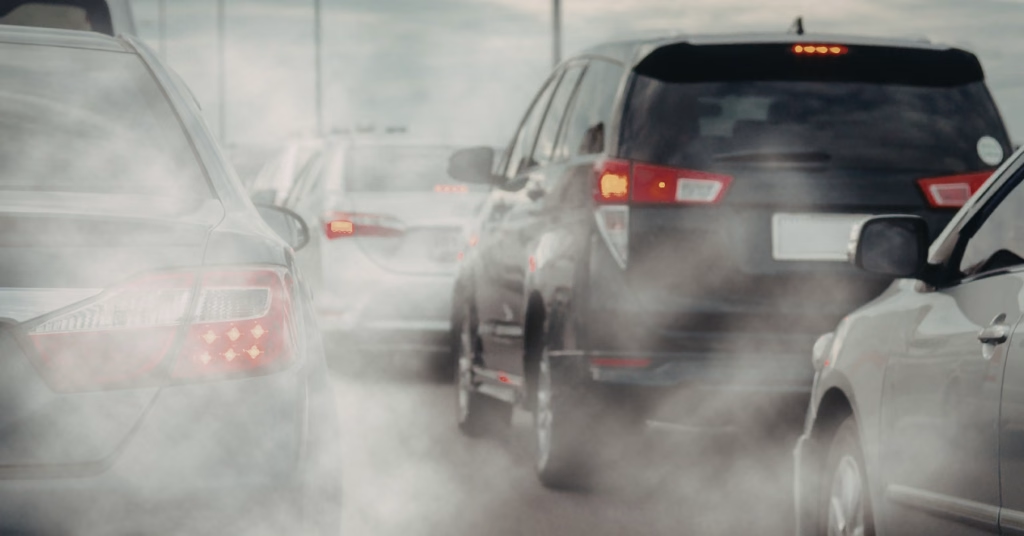
Idling is one of the most common everyday habits on Alberta roads, especially during cold winter months. It feels harmless to let a vehicle run while waiting outside a school, warming up in the driveway, or sitting in a drive-thru. But idling has real impacts on air quality, public health, and even your wallet. The good news is that reducing idling is one of the simplest actions residents and municipalities can take to improve local air quality.
Why Idling Is a Problem
Pollutants from vehicle exhaust
Idling releases a mix of pollutants that affect both the environment and human health. Of particular concern are:
- Particulate matter (PM2.5), which is breathed deep into the lungs
- Carbon dioxide (CO2), a major greenhouse gas
- Nitrogen dioxide (NO2) and volatile organic compounds (VOCs), which contribute to smog and ground-level ozone
Poor air quality affects all living things, and vehicle emissions are a major contributor.
Health impacts
Vehicle exhaust is linked to:
- Increased asthma symptoms
- Respiratory irritation
- Higher risk of heart and lung disease
- Greater exposure for children, who breathe faster and inhale more air per pound of body weight
Idling around schools is especially harmful. Late afternoon smog levels often rise just as parents gather for pick-up, creating a concentration of exhaust that children walk through.
Environmental impacts
Idling contributes to ground-level ozone, a respiratory irritant formed when vehicle emissions react in sunlight. Ozone affects outdoor workers, athletes, children, and seniors.
Financial impacts
Idling wastes fuel. If you idle for more than ten seconds, you use more fuel and produce more CO2 than it takes to restart your engine. If you’re going to be stopped for more than 60 seconds – except in traffic – turn the engine off.
If every driver of a light-duty vehicle avoided idling by just three minutes a day, Canadians would collectively save 630 million litres of fuel annually.*
Idling Myths and Facts
Myth: Vehicles need long warm-ups in winter
Modern engines warm up quickly. Even on cold days, your vehicle is ready to drive as soon as the windows are clear of snow and ice. In fact, cars warm faster and operate more efficiently when being driven. Most moving parts, including tires, wheel bearings, and transmissions, only warm up once the vehicle is in motion.
Myth: Turning the engine off is hard on the starter
Any more than 10 seconds of idling uses more fuel than it takes to restart the engine. However, the break-even time for offsetting any potential incremental maintenance costs for the starter or battery is under 60 seconds.*
Myth: Idling keeps the engine healthy
An idling engine does not operate at peak temperature, which means fuel combustion is incomplete. This can lead to soot buildup, oil contamination, and unnecessary engine wear.
Practical Ways to Reduce Idling
1. Turn off your engine when parked
If you are waiting outside a school, sitting in a parking lot, or stopped for more than 60 seconds, turn the vehicle off.
2. Avoid drive-thrus
Walking inside reduces emissions and often saves time.
3. Don’t arrive early for school pick-up
Arriving right at dismissal time reduces the number of idling vehicles around children.
4. Use a block heater in winter
Block heaters warm the engine coolant, helping the engine reach operating temperature faster. You only need to plug it in for two hours, and using a timer can save energy. At –20°C, block heaters can improve fuel economy by up to 10 percent.*
5. Maintain your vehicle
A poorly tuned engine uses up to 15 percent more energy when idling. Regular maintenance improves fuel efficiency and reduces emissions.*
6. Walk or bike when possible
Reducing vehicle use lowers emissions and improves community air quality.
Breathe Easier: Small Actions Add Up
Idling is a habit we can all change. Turning off your engine if you’ll be stopped for more than 60 seconds, avoiding drive-thrus, using a block heater, and choosing active transportation, when possible, all contribute to cleaner air and healthier communities.

Leave a comment